
Care of your Jiu-Jitsu Gis
Share
So you got yourself a brand new Gi – congratulations! But how do you take care of it properly so it lasts long and doesn’t become unusable after a short time?
Here are some tips:
Shrink or not shrink? If you’re between two sizes or want your Gi to fit a bit tighter, you can intentionally shrink it. This works well with cotton or hemp Gis, but less so with ripstop pants. But be careful: simply using hot water and an industrial dryer can irreparably shrink your Gi. Most Gis are made of 100% cotton, whose fibers are tensioned during manufacturing. Heat releases this tension, allowing the fibers to relax and shrink. Therefore, you should approach this process slowly: start with a wash at a high temperature and air dry. If necessary, you can then dry it at a low temperature in the dryer. Avoid high heat – unless you want to permanently reduce your Gi’s size.
Wash your Gi – don’t be "that one guy" Once your Gi fits as desired, the key is to keep it clean. Rule number one in Jiu-Jitsu: wash your Gi after every training session! Some claim they can wear it for two sessions, but as soon as you sweat, bacteria settle into the fabric. At best, your Gi will smell unpleasant by the second training; at worst, you risk spreading skin infections or fungi. Wear it once, wash it once – and repeat. Use cold water and avoid bleach or harsh detergents, as these attack the cotton fibers and shorten your Gi’s lifespan.
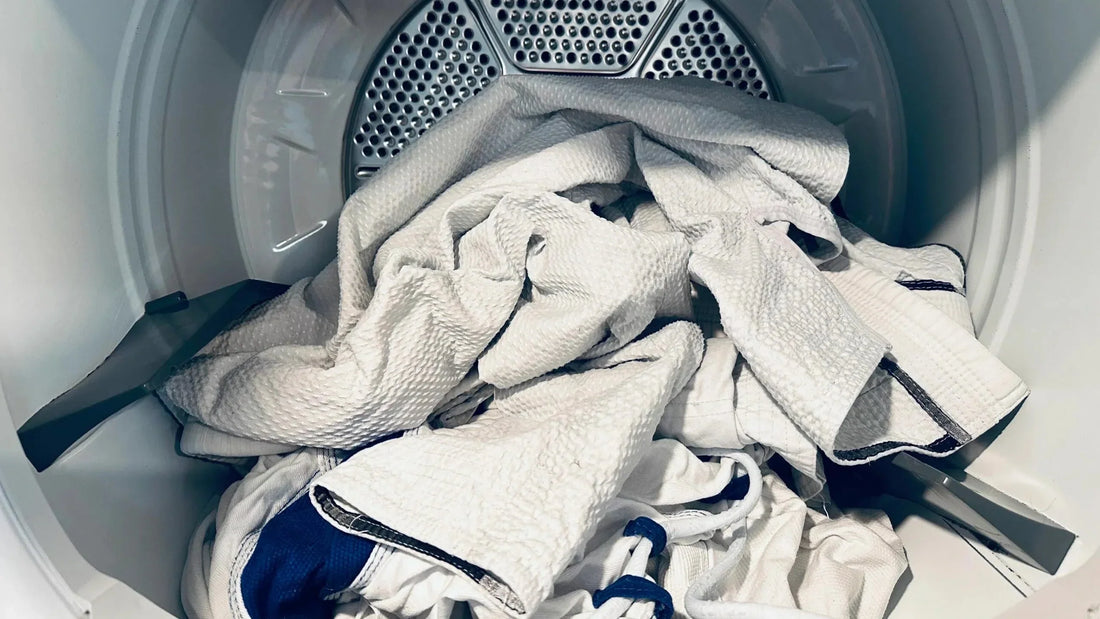
A little heat is enough The best way to dry your Gi is air drying. Avoid direct sunlight, as UV rays fade colors and heat can further shrink the Gi. In humid climates, air drying may not be an option. In that case, you can use your dryer’s "air dry" mode. Light drying at low temperature can help tighten the fibers a bit, but don’t leave your Gi in the dryer too long. Avoid high heat, as it not only causes significant shrinking but also damages fibers—whether cotton, hemp, or polyester—reducing durability.
Stains – and what you can do about them Whether blood, grease, hair dye, or the chocolate you ate after training – stains on your Gi are inevitable. But before throwing it into the wash with a lot of bleach, try targeted stain removal first. For a white Gi, you can apply a small amount of bleach directly to the stain and let it sit for a few minutes before washing. This won’t damage your colorful embroidery or patches. For oil-based stains, a mixture of vinegar and dish soap can help. Most hair dyes wash out easily, but if you’re unsure, you can also use vinegar and dish soap. If nothing helps – ask your grandma; she surely knows an old home remedy.
The moment your Gi rips That dreaded ripping sound – maybe you did a squat too deep the day after Thanksgiving, or your training partner was too aggressive with the lapel grip. But don’t panic! Depending on the size and location of the tear, your Gi can still be saved. If you’re not sure how to fix it yourself—placing a second piece of fabric behind the tear and sewing it firmly—take it to a tailor. They can tell you if it’s salvageable. I personally had a Gi repaired six times – my "Franken-Gi"!
The dreaded Gi smell Everyone knows it. Everyone hates it. And eventually, it will happen. But you can at least delay the battle against the "Gi funk" for a while. First – as mentioned – wash your Gi after every training session, preferably as soon as possible. If you can accept slight shrinking, airing your Gi in the sun before washing reduces odor-causing bacteria. A little vinegar in the wash or a vinegar-water soak before washing can also help. If your Gi already smells strongly, you can treat it with a carpet and upholstery cleaner from the hardware store. If nothing works anymore, there’s only one last option: wash with bleach – but be aware your Gi might then have uneven discoloration. Eventually, you’ll have to say goodbye to your Gi anyway. Your training partner will thank you!
Keep training – Oss!


